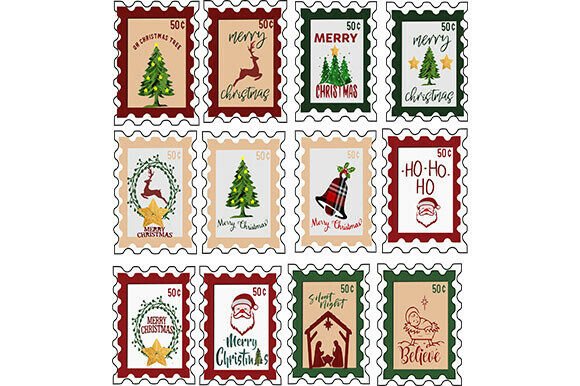
12 Christmas Stamps: Festive Digital Assets for Your Holiday Designs
When the holiday season approaches, every designer, small business owner, and creative enthusiast faces the annual challenge of capturing that specific festive spirit. We often spend hours searching for the right typography or illustration to convey warmth, nostalgia, and joy. If you are looking for a versatile solution that bridges the gap between illustration and graphic design, consider the utility of a dedicated asset set. Specifically, a curated collection of 12 Christmas Stamps offers a unique blend of visual charm and practical application for a wide range of projects.
Visual Characteristics and Design Appeal
Unlike standard vector graphics or complex illustrations, a stamp design carries an inherent "analog" personality. These assets are designed to mimic the tactile look of traditional rubber stamps or postage marks, which instantly adds a layer of nostalgia and authenticity to your work. The visual style typically balances clean lines with slightly textured edges, making them feel handmade yet professional.
The appeal of these assets lies in their ability to act as focal points without overwhelming the rest of your layout. Because they are provided as .PNG images with transparent backgrounds, they integrate seamlessly into digital compositions. You do not have to worry about messy masking or background removal. The personality of these graphics is versatile; they can be playful and whimsical for children’s holiday cards, or sophisticated and minimalist for corporate seasonal greetings, depending on the color palette you pair them with.
Practical Applications for Creators and Businesses
The true value of a design asset is measured by its adaptability. A set of 12 Christmas Stamps is not limited to a single use case. For graphic designers, these elements are perfect for creating social media graphics that need to stop the scroll. A stamp-style graphic works exceptionally well as a "badge" for a sale announcement or a "New Arrival" tag during the holiday rush.
For those in print-on-demand and product design, the applications are vast. You can incorporate these stamps into packaging design for seasonal products, adding a festive seal to coffee bags, candle boxes, or gift wrap. Because the files are high-resolution, they translate well from screen to print, maintaining clarity on both business cards and large posters.
- Greeting Cards & Invitations: Use the stamps as central imagery or corner embellishments for Christmas party invites and holiday thank-you notes.
- Scrapbooking & Journaling: Digital scrapbookers can use these to create borders or highlight specific memories in their December Daily projects.
- Brand Identity & Logo Design: Small businesses can temporarily update their logos or website banners with a festive stamp to show seasonal relevance without a complete rebrand.
- Editorial Design: Bloggers and publishers can use these images to break up text in holiday gift guides, making the content more visually engaging.
Influence on Visual Hierarchy and Brand Perception
In design, visual hierarchy determines the order in which the human eye perceives what it sees. Using a distinct graphic element like a stamp helps direct the viewer's attention. A stamp acts as a visual anchor. When placed correctly, it grounds the text and creates a clear entry point for the reader.
From a branding perspective, consistency is key. Using a cohesive set of graphics ensures that your holiday marketing materials look unified across different platforms. Whether you are sending out an email newsletter or posting on Instagram, using the same style of Christmas stamps reinforces brand recognition. It signals to your audience that you pay attention to details and that your brand is active and engaged with the current season.
Integration with Typography and Layout
One of the most common challenges in design is balancing imagery with text. This is where the "stamp" aesthetic shines. Because these graphics often have a contained, circular, or rectangular shape, they pair exceptionally well with both sans serif and serif fonts.
For example, if you are designing a vintage-style holiday card, you might pair a textured Christmas stamp with a script font or a handwritten font to enhance the nostalgic feel. Conversely, for a modern, corporate holiday campaign, combining a clean stamp graphic with a geometric sans serif font creates a professional and approachable look. The stamps provide the "festive" element, while the typography handles the "informational" load.
Technical Considerations for Your Projects
When incorporating new assets into your workflow, technical quality is non-negotiable. The set of 12 Christmas Stamps comes as a zipped folder containing individual .PNG files. This format is industry standard for digital assets because it preserves transparency. This means you can layer these stamps over complex backgrounds—like a photo of a snowy landscape or a textured paper background—without seeing a white box around the graphic.
As a designer, I always recommend checking the resolution of the files before starting a large print project, such as a banner or a poster. However, for most digital applications (web, social, email) and standard print items (cards, stickers, flyers), high-quality .PNGs provide the necessary flexibility.
Choosing the Right Assets for Your Workflow
When evaluating a new set of design assets, consider the "Cost per Use." A single-use graphic has limited value, but a versatile set that can be recolored, resized, and applied to multiple projects offers a significant return on investment. Look for assets that are not overly trendy, so they remain relevant for a few seasons, but are distinct enough to make your work stand out.
Finally, always ensure you are sourcing your assets from a reliable creator who offers clear licensing for commercial use. This protects your business and allows you to use the designs on products you sell, not just personal projects. By integrating a high-quality set of festive graphics into your toolkit, you streamline your creative process, allowing you to focus more on strategy and less on searching for the right visual element.